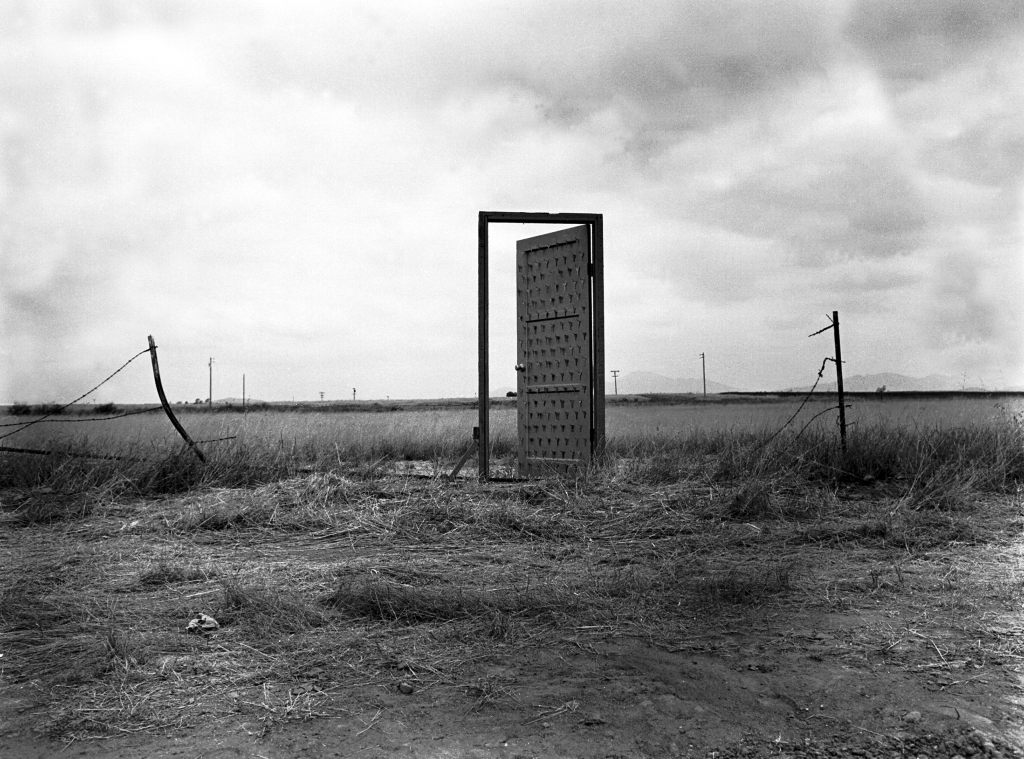
This essay advances a reading of Daniel Sada’s Porque parece mentira la verdad nunca se sabe (1999) as a novel that registers the capacity of literary form to think through the intertwined questions of futurity, possibility, and (dis)orientation. I argue that the novel’s emphases on discontinuity, often praised as resisting the influence of fixation and unification, simultaneously open the door to partake in the speculative projection of other spaces and new possibles. In Sada’s novel the desert operates as a site of primitive violence and primordial shelter, a repository of superfluity and a bustling concourse for global exchange, as both limit and horizon. Oscillating between these poles, Porque parece mentira not only performs the uneven and combined development of the U.S.-Mexico border, but rather accedes to a kind of thinking that opens the door to reorient economic disaster toward utopian possibility.
Latin American Literary Review, vol. 53, no. 106, 2026, pp. 114-123.
 Pavel Andrade